
How a Civil Engineering Diploma Can Launch Your Career in Singapore

Introduction
Decades of strategic development have driven Singapore’s transformation into a global city. From underground transport systems to integrated townships and commercial zones, civil engineering supports the infrastructure that keeps the country connected and resilient.
A Civil Engineering Diploma provides a practical entry point into this dynamic sector. It opens up clear civil engineering career pathways, helping learners step into skilled roles across construction, infrastructure, and project management.
Avanta Academy’s diploma programme is built to meet industry demands. It equips learners with job-ready skills, relevant knowledge, and the confidence to succeed. In this guide, we explore the demand for civil engineers in Singapore, what the diploma covers, where it can lead, and how Avanta supports learners at every stage.
Key Takeaways
- Civil engineering offers strong job prospects in Singapore due to ongoing urban development, infrastructure upgrades, and sustainability goals.
- A structured diploma equips learners with practical, job-ready skills that employers value across the construction and engineering sectors.
- The learning pathway supports career advancement, with options to upskill further through advanced qualifications and industry-recognised training.
- Flexible course formats make it easier for working adults and newcomers to upskill without disrupting their current responsibilities.
What’s Driving Demand for Civil Engineering in Singapore?
Singapore continues to invest heavily in its built environment, with large-scale projects shaping the city’s future. Transport expansions, airport upgrades, and new housing developments are just areas where infrastructure grows. Behind these efforts are civil engineers whose work ensures that these developments are safe, sustainable, and built to last.
This strong pipeline of public and private projects creates well-defined civil engineering career pathways for those entering or advancing in the field.
Regulatory requirements from bodies like the Building and Construction Authority (BCA) increase the need for qualified personnel. Engineers must meet strict safety, compliance, and quality standards, making formal training and certification more critical than ever.
Singapore’s focus on sustainability also changes how infrastructure is planned and delivered. Projects now prioritise eco-friendly methods, energy-efficient systems, and the use of sustainable materials. Civil engineers play a key role in turning these goals into reality.
At the same time, older infrastructure across the island requires ongoing maintenance and upgrades. Whether it is strengthening ageing buildings or modernising essential services, skilled professionals are needed to support this work.
These factors contribute to a growing demand for trained individuals. For learners ready to upskill, these developments offer meaningful and long-term civil engineering career pathways across various roles in the sector.

How a Diploma Supports Practical Career Growth
A Civil Engineering Diploma offers a strong starting point for anyone aiming to move forward in the industry. It opens up clear civil engineering career pathways and builds the foundation needed to take on more skilled or supervisory roles.
The programme focuses on civil engineering training that is practical and grounded in real site conditions. Learners gain confidence by applying key concepts such as reading site plans, selecting materials, and following safety protocols.
For many, the diploma puts structure around what they already know from on-the-job experience. It validates existing skills and adds formal recognition that can support job applications, promotions, or a shift into new areas of responsibility. It also shows employers that the learner understands not just how to do the work but why it must meet specific standards.
By combining hands-on learning with formal instruction, the diploma helps learners build confidence, credibility, and access to long-term civil engineering career pathways across Singapore’s infrastructure and construction sectors.
Why Learners Choose This Pathway
Many learners are drawn to this path for one key reason: progress. For those in physically demanding site roles, the diploma offers a chance to move into more technical, supervisory, or stable positions with better long-term prospects.
This shift opens access to civil engineering career pathways that offer structure, recognition, and room for growth in an evolving industry.
Some learners are already in construction or engineering but want to convert hands-on experience into formal qualifications. Others come from unrelated sectors and see civil engineering as a promising entry point into a field with strong demand and job stability.
For foreign workers, a recognised local qualification can build trust with employers and support long-term employability in Singapore. It shows a commitment to the industry and an understanding of local standards.
Importantly, the programme accommodates different schedules. Many learners are working adults managing full-time jobs and family responsibilities. With options such as a part time diploma in civil engineering, the programme allows them to upgrade their skills without stepping away from work.
For anyone looking to build a sustainable career, the diploma provides a practical first step into established civil engineering career pathways in Singapore’s growing infrastructure sector.
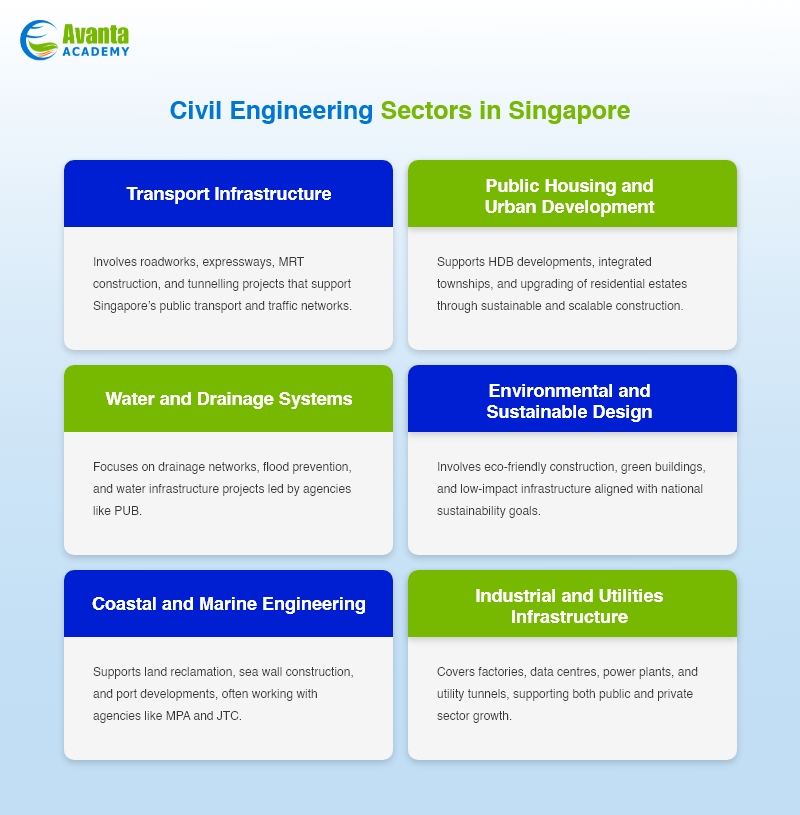
Where a Civil Engineering Diploma Can Take You
Graduates of a Civil Engineering Diploma are well-placed to step into roles that support the foundations of Singapore’s infrastructure. These positions combine technical knowledge with hands-on application, making them ideal for those looking to put their skills into practice from day one.
Many of these roles mark the beginning of long-term civil engineering career pathways, offering a solid launchpad for future advancement.
-
Assistant Engineer:
Supports senior engineers in planning, site coordination, and documentation. This role is often the first step for those looking to build technical and project management skills.
-
Site Supervisor:
Oversees daily construction work, ensures projects follow the plan, and enforces safety protocols. It is a critical role for maintaining both quality and progress on site.
-
Quantity Surveyor:
Manages project costs, prepares material estimates, and oversees tenders. Learners with strong analytical skills may later choose to pursue a quantity surveyor course to expand their capabilities.
-
Technical Officer:
Handles day-to-day site operations, supports inspections, and communicates with project teams to address technical issues efficiently.
-
CAD Drafter:
Prepares precise technical drawings and layout plans based on engineering input. This role suits learners with a keen interest in design and digital drafting tools.
-
Safety Coordinator:
Monitors site conditions and ensures compliance with safety regulations. For those interested in specialising further, a safety supervisor course in Singapore can enhance qualifications in this high-responsibility area.
Each role offers a pathway into the civil engineering sector, with opportunities to move up through additional training, experience, and specialisation. These entry points are part of broader civil engineering career pathways supporting steady growth in a vital, resilient industry.

Next Steps in Civil Engineering Career Growth
A career in civil engineering is not just about finding a job. It offers a clear and structured route for growth, with multiple civil engineering career pathways available to those who are ready to upskill.
Newcomers often begin with entry-level certification courses that introduce key concepts such as construction processes, materials, and safety practices. These short programmes help lay the foundation for those preparing to enter formal civil engineering career pathways.
From there, a diploma in civil engineering helps learners develop technical skills and supervisory capabilities. This step often marks the start of more advanced civil engineering career pathways, where individuals can take on greater responsibility in project execution and coordination.
For those who want to deepen their expertise, progressing to an advanced diploma in civil engineering offers more in-depth training. Topics such as structural design, planning frameworks, and environmental considerations prepare learners for more complex roles, including project leadership.
Conversely, ISO training provides added value for roles focused on quality assurance, audits, or regulatory compliance. Courses like Integrated Management System training or ISO certifications complement technical learning and open up additional civil engineering career pathways within project governance and systems management.
Long-term progression in the field also requires adaptability. As regulations and technology evolve, continuous learning ensures that professionals remain effective, relevant, and ready for what comes next.
For those with their sights set on becoming Professional Engineers (PEs), the journey involves further study through a recognised civil engineering degree and meeting the requirements set by the Professional Engineers Board (PEB), including relevant experience and an interview.
From early site roles to leadership and specialised positions, civil engineering career pathways offer flexibility and upward mobility at every stage. A diploma is only the beginning. How far you go depends on the skills you build and the choices you make.

Questions You Might Have
1. Can I enrol even if I have no experience in construction or engineering?
Yes. The Civil Engineering Diploma at Avanta Academy suits learners from all backgrounds. It starts with the basics and gradually builds up to more advanced content, making it ideal for beginners or those looking to formalise hands-on experience. You’ll receive guidance throughout, helping you gain the skills needed to step confidently into civil engineering career pathways.
2. Do employers recognise the diploma, or will I still need hands-on experience?
The diploma is recognised by employers in Singapore. While practical experience is still necessary, having a formal qualification shows that you understand safety protocols, technical concepts, and industry standards. This makes you more competitive for key roles and supports steady progress along the civil engineering career pathways.
3. Can I juggle this course with work and other responsibilities?
Yes. The course offers both full-time and part-time options. The part-time format runs on Sundays, while the full-time course spreads across weekdays with shorter sessions. This flexibility allows working adults to upskill without disrupting their current responsibilities while still gaining access to valuable civil engineering career pathways.
4. Will this qualification open doors beyond construction sites?
Yes. A diploma can lead to on-site opportunities and in planning, safety, technical design, and compliance roles. As infrastructure projects become more complex and regulated, civil engineering career pathways are expanding to include positions in project coordination, sustainability planning, and systems management.

Conclusion
A career in civil engineering offers more than short-term job security. It provides a foundation for meaningful, long-term work in an industry that supports Singapore’s progress. From site coordination to structural planning, the field continues to grow in both scale and complexity.
Avanta Academy’s Civil Engineering Diploma prepares learners to meet these demands confidently. It combines hands-on learning with industry-relevant knowledge, helping graduates enter structured civil engineering career pathways that offer real opportunities for advancement.
With the option to pursue an Advanced Diploma, learners can deepen their expertise and move into specialised or leadership roles. Flexible scheduling and a supportive environment make it accessible for working adults and international learners alike.
If you’re looking to grow your capabilities and build a stable future in this essential industry, explore our course details or connect with one of our advisors to see where the civil engineering career pathways can take you.


